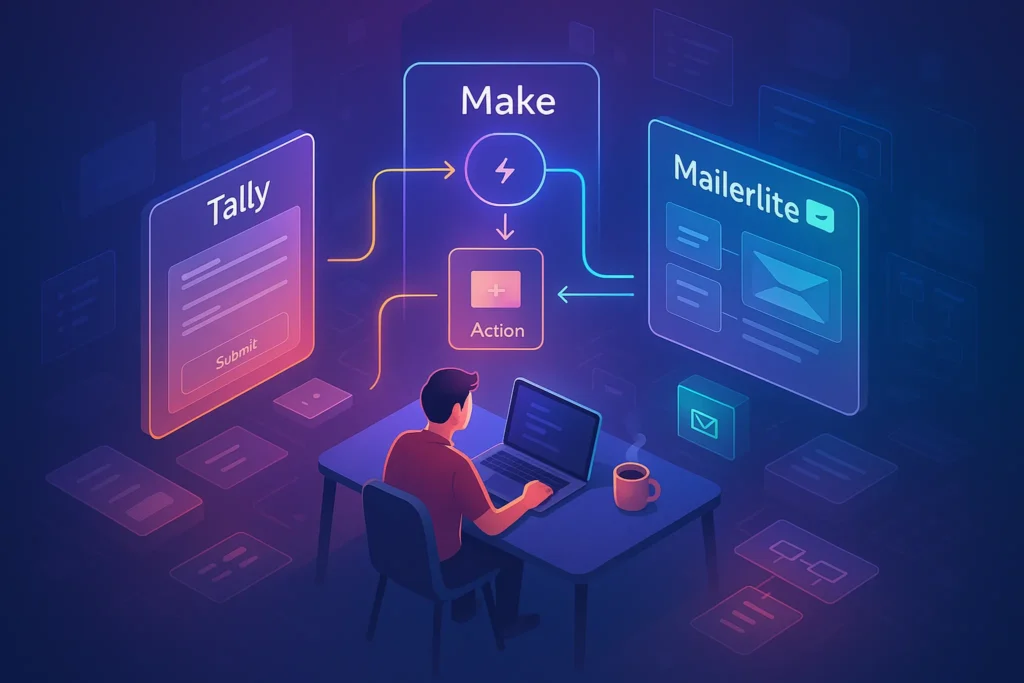
🚀 Automation That Actually Moves the Needle
Email still delivers better ROI than most digital channels—but only when it’s automated with intent. Autopilot isn’t “set and forget”; it’s design and iterate. This guide is a hack-focused playbook: segmentation moves you’re not using yet, personalization that goes beyond “{FirstName},” trigger flows that compound revenue, testing methods that reveal leverage, and AI-assisted workflows that save hours. It’s not a beginner playbook and not a tool comparison. If you need platform roundups, pivot later to 10 Best Email Marketing Tools or the broader roadmap in Best Marketing Automation Platforms for Scalable Growth. Here, we’re going to wire smarter campaigns—fast.
💡 Nerd Tip: Every hack you’ll see is deliberately tool-agnostic. If your platform supports tags, segments, flows, and API/webhooks, you can do this today.
🎯 Context & Who It’s For
This is for growth marketers, e-commerce owners, SaaS teams, creators, and freelancers who already send email and want compounding gains without bloating their stack. You’ll get: segmentation recipes that turn data into timing, content selection that feels human at scale, trigger calendars that pay you while you sleep (ethically), and optimization methods that surface the biggest levers fast. If you’re totally new to automation, warm up with Email Automation for Non-Techies, then come back and layer these hacks on top. Shopify folks can cross-reference with Email Automation for Shopify Store Owners and checkout-friendly personalization ideas in Best Email Personalization Tools for E-Commerce.
🧭 Segmentation Hacks You’re Probably Not Using
Great segmentation is less about slicing endlessly and more about learning moments. The best segments encode timing, intent, and context so your automation doesn’t shout the wrong thing at the wrong time.
Start with behavior windows. Rather than a monolithic “Active” list, create bands based on recency of action (site visit, product view, feature use, last purchase). A subscriber who viewed a category in the last 3 days is not the same as someone who viewed it 21 days ago. Your content cadence and offers should reflect that difference. Push near-term windows harder (fewer messages, more relevance) and let long windows cool with education or social proof.
Next, add preferred device patterns. Many platforms log device in events; if 75% of opens happen on mobile, shorten copy, simplify CTAs, and prioritize post-click experiences that load instantly on cellular. Desktop-heavy segments can handle deeper visuals and comparison tables. This isn’t aesthetic—it’s conversion physics.
Layer interaction tempo. Some subscribers binge on your content after a long silent period; others nibble consistently. Build a simple score: +2 for opens, +3 for clicks, +4 for view-product events, −1 every week of inactivity. Use that to adjust frequency capping and content depth. High-tempo folks can receive a dense educational series; low-tempo recipients get a single clear CTA and a quiet exit.
E-commerce stores should add category affinity. Don’t just send “best sellers”; send best sellers in the category the person actually browsed last. SaaS teams can mirror this with feature affinity: if users live in the dashboard and never touch integrations, highlight quick wins in that feature before asking for an upgrade pitch about automation.
Finally, create a risk of churn micro-segment. You don’t need ML to start—rule-based scores work. Tag anyone with no opens in 60 days, no sessions in 30 days, and no purchases in 120 days as “Rescue.” That segment powers polite win-back sequences and keeps your main list clean. You’ll improve deliverability and protect conversion rate from disinterested traffic.
💡 Nerd Tip: Think in event pairs. “Viewed product → didn’t add to cart” and “Started trial → didn’t activate feature X” are where your best messages live.
🎁 Personalization Beyond First Name
First name is table stakes. The next level is context-aware content that proves you’re paying attention without creeping people out. The safest, highest-ROI version is behavior-triggered modular content: you assemble an email from blocks that turn on or off based on recent behavior, inventory, contract tier, or reading history.
For stores, dynamic modules should show category-matched recommendations and complimentary accessories, not random “Others also bought.” If someone viewed a mirrorless camera, a batteries-and-lenses module outperforms a generic coupon. For SaaS, show feature nudges tied to actions: “You created 3 reports this week—try scheduled exports so your team gets them automatically.”
Subject lines can be AI-assisted—just keep them topic faithful. Ask your generator for five variations with a rule: “No clickbait, keep keyword X, ≤ 55 characters.” Blend curiosity with clarity. Teams commonly see 5–12% open lift from AI-iterated subjects when they honor brand tone and keep message-match tight.
Use micro-personalization in the body to reduce friction. Pre-fill the CTA with a saved preference (“Resume your build,” “Continue Cart,” “Start the 2-minute setup”). Reference time anchors (“Last Wednesday you saved…”) to create continuity. Avoid overfitting: limit to 2–3 personalized elements per email so it still reads like a human wrote it.
For high-consideration products, add social proof matching: surface testimonials from the same industry, team size, or use case as the recipient’s. That’s personalization the reader welcomes because it shortens evaluation, not because it shows off your data. When in doubt, borrow tactics from Best Email Personalization Tools for E-Commerce—their modules are built around relevance, not gimmicks.
💡 Nerd Tip: Personalize the landing as much as the email. If your CTA claims “Top picks for your workflow,” the page must load that exact block first.
⚡ Trigger-Based Automation Hacks (Flows That Compound)
Triggers are where automation prints money because they ride on intent signals. Start with the three flows below and then branch.
Abandoned cart with memory. Instead of sending three clones, trigger a progressive narrative. Email 1: a helpful nudge with a cart reminder and a “saved for later” option. Email 2 (if product is high-consideration): an FAQs block sourced from customer service. Email 3 (if inventory is low or price changed): a transparent note. Avoid blanket discounts; test a checkout helper (“We’ll hold it for 48 hours”) vs. value reinforcement (guarantee, return policy). Stores typically reclaim 10–20% of abandoners with thoughtful sequences.
Post-purchase expansion. The most underused flow is no-ask onboarding for new buyers: show how to get the most from what they bought—care instructions, surprise use cases, setup videos. Only after you deliver value do you suggest accessories or refills. Expect better repeat purchase rate and fewer returns because buyers feel supported.
Inactivity → win-back with choice. The best win-backs don’t just beg; they offer paths: fewer emails, different topics, pause for a month, or goodbye (one-click). Subscribers who choose a path are more likely to stay engaged; those who leave keep your sender reputation healthy. Add a “what changed?” micro-survey to learn which topics are cooling off.
SaaS teams should also wire activation rescue: triggered when a user gets stuck before an aha moment. The message is educational, not promotional: a 90-second video, a pre-filled template, and a “reply here to get help” invitation that routes into support.
💡 Nerd Tip: Add flow exit logic. If someone buys after email 1, they should never see email 2. It sounds obvious, but many flows leak. Seal them.
🧪 Testing & Optimization Hacks That Reveal Leverage
A/B testing subject lines is fine; diagnosing friction is better. Start by testing CTA location and decision framing. In mobile-heavy segments, a top CTA often beats a footer CTA. For complex decisions, a two-step CTA (“See how it works” → “Start now”) can outperform a direct ask because it respects the buyer’s stage.
Use multi-variant testing inside drip campaigns. Instead of testing just one element per email, assign purpose per send: Email 1 tests subject variants; Email 2 tests content order; Email 3 tests CTA framing. You’ll get clean reads without needing massive lists.
Bring holdout groups back. For flows like post-purchase and win-back, hold 5–10% of eligible users as a no-send control for a week. This gives you true incremental lift, not just vanity metrics.
Pair tests with behavioral cohorts. The same test can work differently for binge readers vs. grazers, high AOV vs. low AOV buyers, desktop vs. mobile. Don’t average away insights—train yourself to look for interaction effects (test result × cohort). That’s where big levers hide.
AI can assist with test ideation: ask for five hypotheses grounded in your metric history and your personas. Then codify tests into a testing calendar so you don’t thrash. Want a gentler ramp? The frameworks in Email Automation for Non-Techies show how to set this up without drowning in options.
💡 Nerd Tip: End tests with a learning note in your playbook: hypothesis, result, next action. Institutional memory compounds like interest.
🔌 Integration Hacks: CRM, E-Commerce & Analytics in One Loop
Automation gains spike when your email tool sits in the data stream, not beside it. Connect CRM (lifecycle stage, pipeline), store platform (orders, inventory), and product analytics (feature use, plan tier). The goal is a single source of truth for segmentation and triggers.
For e-commerce, feed inventory status to email so triggers can adjust (hide OOS, showcase restocks, switch recommendation logic). For SaaS, stream in-app events like “created report,” “invited teammate,” or “hit usage threshold.” These fuel precise nudges and honest upgrade pitches.
Push campaign and flow data back into your analytics stack to measure downstream impact (repeat purchase, LTV, churn). When possible, tie email IDs to customer data platforms so you can orchestrate cross-channel messages (SMS, push) without stepping on each other. If you’re ready to scale platform choices, compare features in Best Marketing Automation Platforms for Scalable Growth—this post stays hack-centric by design.
💡 Nerd Tip: Design a one-pager schema (key events + properties). If everyone tags events consistently, segmentation stays effortless.
🤖 AI-Assisted Workflow Hacks (Save Hours, Keep Taste)
AI won’t replace your strategy; it will shorten drafts and sharpen decisions. Use it to produce first-pass sequences in your brand voice by feeding a tone guide, audience segments, and value props. Then edit ruthlessly. The win isn’t laziness; it’s iterative width—you consider more ideas before picking one.
Let AI generate subject line sets within constraints: include brand term, reflect the primary benefit, no spammy punctuation. Many teams report +5–10% opens when they use AI to explore but humans to select. For send-time, a predictive optimizer learns when each subscriber usually opens; this often yields a 2–6% lift in open rate and steadier inbox placement.
AI also helps summarize reply intent from inbound messages, routing “where is my order?” to support and “partnership” to sales with labels you define. For research, ask it to cluster free-text survey answers from your post-purchase forms into themes. You’ll write better emails when you hear customers in their own words.
💡 Nerd Tip: Create a “Do Not Generate” list—phrases and claims your brand never uses. Guardrails protect trust while you move faster.
📈 Measuring Impact & ROI (What to Watch, What to Ignore)
Measure what nudges behavior, not just pixels. Open rate is directional; you care about click-to-conversion rate, assisted revenue, repeat purchase rate, trial-to-paid, and LTV movement. Build flow scorecards: each trigger flow shows eligible population, reach, revenue per recipient, and incremental lift vs. holdout. When a flow stagnates, you’ll see it early and fix the right piece—segment, message, cadence.
Adopt time-to-value as a north star metric for onboarding flows. The faster a user experiences the promised benefit, the stickier they get. If your emails shorten that path with pre-filled templates, saved views, or quick actions, the revenue follows.
Email also protects your paid CAC by improving repeat rate and reducing churn. Report it that way to leadership and clients; email isn’t a vanity channel—it’s the engine that turns expensive clicks into compounding revenue.
💡 Nerd Tip: Tie KPIs to one behavior per flow. Abandoned cart? Checkout starts. Post-purchase? Second order within 30 days. Inactivity? Any session within 7 days.
🧠 Want to Scale Smarter?
Compare automation platforms with built-in segmentation, predictive send, and ecommerce/CRM integrations. Start with free tiers; upgrade when the math works.